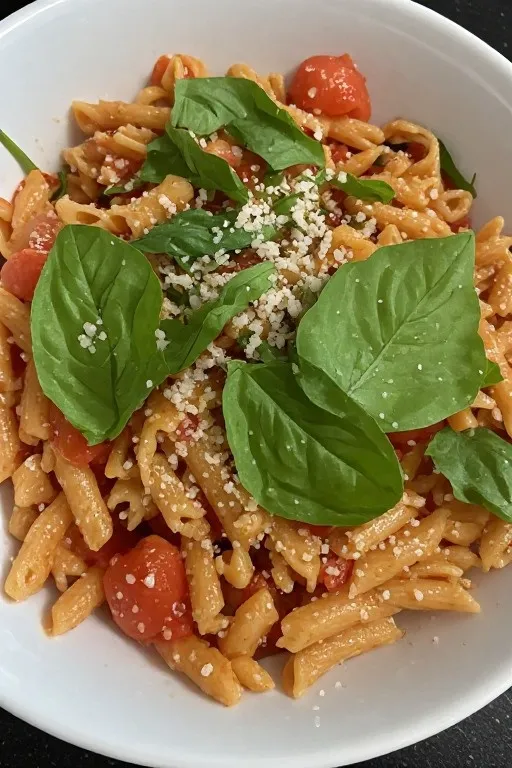
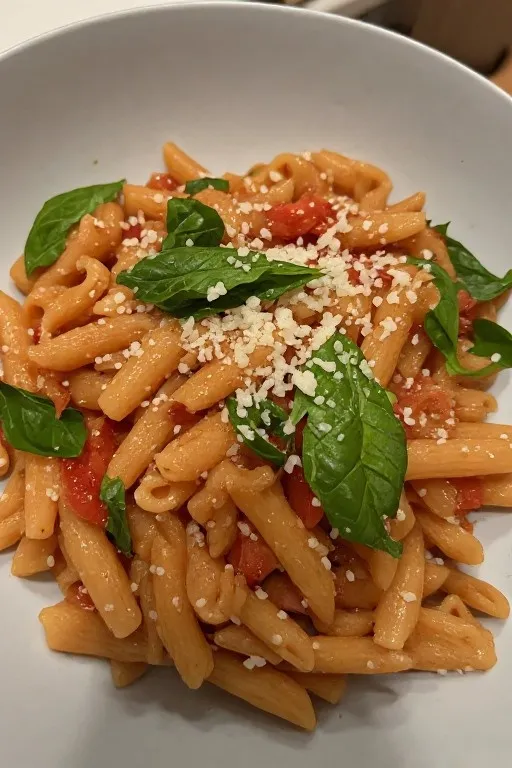
This tomato basil pasta comes together with a simple fresh tomato sauce in about 25 minutes, no long simmer required. A weeknight dinner that tastes like more effort than it took.
There's a version of tomato sauce that simmers for hours, and there's this one, which gets most of the way there in about the time it takes to boil the pasta. Fresh tomatoes break down fast in a hot pan with garlic and olive oil, and once they've released their juices and started to collapse, you've basically got a sauce.
This isn't trying to be a slow-cooked Sunday sauce. It's meant for a random Tuesday when you have decent tomatoes on the counter and don't want to spend the evening standing over a pot. Garlic, olive oil, tomatoes, basil, and good pasta water at the end to bring it all together, that's the whole method.
I make this most in the summer when tomatoes actually have flavor, but it holds up fine the rest of the year with good canned tomatoes if fresh ones aren't worth buying.
Simple, fresh ingredients that taste like more effort than they are
Naturally vegetarian and easy to make vegan
Great way to use up ripe summer tomatoes
Works with fresh or canned tomatoes year-round
One pan for the sauce, minimal cleanup
What You Need
Pasta. Spaghetti, linguine, or penne all work well. Choose whatever shape you like, since this sauce isn't picky about what it's tossed with.
Tomatoes. Ripe, in-season tomatoes give the best flavor and require very little to taste great. Roma tomatoes have less water, which helps the sauce come together faster, but any ripe tomato works.
Garlic. A generous amount, since garlic and tomato are really the backbone of this whole dish. Slice it thin rather than mincing for a slightly different texture and a more mellow flavor once it cooks.
Olive oil. Used generously here, both to cook the garlic and tomatoes and to finish the dish. Good quality olive oil makes a real difference in a sauce this simple.
Fresh basil. The other half of the dish's name and just as important as the tomatoes. Add most of it at the end of cooking so it stays bright and doesn't turn dark or bitter from too much heat.
Red pepper flakes. Optional, but a small pinch adds background warmth that plays well against the sweetness of the tomatoes.
Salt and black pepper. Season generously, and don't forget to salt the pasta water well too, since that's one of the main ways pasta itself gets seasoned.
Parmesan cheese. Optional, but a generous grating over the top adds a salty, savory finish. Leave it out for a vegan version.
Reserved pasta water. A small amount stirred in at the end helps the sauce cling to the pasta and brings everything together into something cohesive rather than watery tomatoes sitting on top of noodles.
For serving. Extra parmesan, a drizzle of good olive oil, and crusty bread on the side to catch any extra sauce.
How to Make Tomato Basil Pasta
Cook the Sauce
Bring a large pot of salted water to a boil and cook the pasta according to package instructions. Reserve about a cup of pasta water before draining.
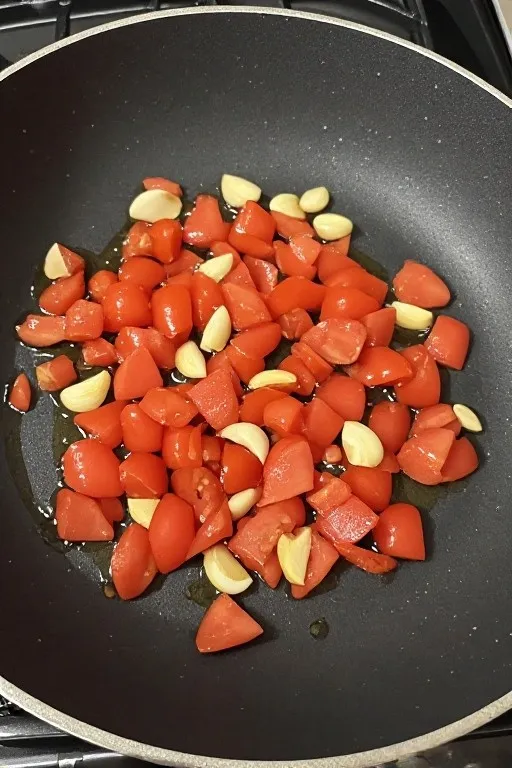
While the pasta cooks, heat olive oil in a large skillet over medium heat. Add the sliced garlic and cook for 1 to 2 minutes, until fragrant but not browned.
Combine and Finish
Add the diced tomatoes, salt, pepper, and red pepper flakes if using. Cook for 8 to 10 minutes, stirring occasionally, until the tomatoes have broken down and released their juices into a loose sauce.
Add the drained pasta directly to the skillet along with a splash of the reserved pasta water. Toss to combine, adding more pasta water as needed until the sauce coats the pasta evenly.
Remove from heat and stir in most of the fresh basil, saving a little for topping. Taste and adjust salt as needed.
Serve topped with the remaining basil and a generous grating of parmesan.
This is a good match for the healthy bruschetta if you're leaning into fresh tomato and basil flavors for a whole meal, starting with bruschetta as an appetizer and finishing with this pasta as the main course.
💚 Upgrade your meals with high protein recipes the whole family will love — check out The High Protein Cookbook, packed with delicious protein-packed recipes to keep you full and energized!
Tips
Salt the pasta water generously. This is one of the main opportunities to season the pasta itself, not just the sauce. The water should taste noticeably salty, closer to seawater than a light seasoning.
Save the pasta water before draining. The starchy water is what helps the sauce cling to the pasta instead of sitting separately. Don't skip this step, even though it's easy to forget in the moment.
Add most of the basil at the very end. Cooking basil too long dulls its flavor and can turn it dark. Stir most of it in off the heat, right before serving, to keep it bright and fresh.
Use ripe, in-season tomatoes when you can. This sauce depends a lot on the quality of the tomatoes, since there's no long cooking time to develop deep flavor the way a slow-simmered sauce would.
Don't let the garlic brown. Burnt garlic turns bitter fast and will throw off the whole dish. Cook it just until fragrant over medium heat, watching closely.
Variations
Add protein. Grilled chicken, shrimp, or Italian sausage all work well tossed in at the end for a heartier meal.
Make it creamy. Stir in a splash of heavy cream or a spoonful of mascarpone at the end for a richer, creamier sauce.
Add mozzarella. Small torn pieces of fresh mozzarella stirred in right before serving melt slightly and add a caprese-inspired twist.
Use cherry tomatoes. Halved cherry tomatoes cook down a little differently than diced larger tomatoes, giving a slightly chunkier, sweeter sauce.
Make it spicy. Increase the red pepper flakes, or add a diced fresh chili along with the garlic for more heat.
Substitutions
Fresh tomatoes can be replaced with canned diced tomatoes, well drained, especially useful outside of tomato season when fresh ones lack flavor.
Fresh basil can be replaced with fresh oregano or a mix of fresh herbs, though the flavor will be noticeably different from classic tomato basil.
Parmesan cheese can be left out entirely for a vegan version, or replaced with a plant-based parmesan alternative.
Regular pasta can be replaced with a gluten-free pasta or a whole wheat pasta for a heartier, higher-fiber option.
Olive oil can be replaced with avocado oil in a pinch, though olive oil is more traditional here and adds more flavor to such a simple sauce.
Storage
Store leftovers in an airtight container in the fridge for up to 3 days. The pasta will absorb some of the sauce as it sits, so it may seem a bit drier once reheated.
Reheat in a skillet over medium-low heat with a small splash of water or broth to loosen the sauce back up, or in the microwave in short intervals, stirring in between.
This doesn't freeze particularly well, since both the pasta and fresh tomato sauce lose some texture once thawed. It's best made in a batch size you'll finish within a few days.
Frequently Asked Questions
Can I use canned tomatoes instead of fresh?
Yes, well-drained canned diced tomatoes work well, especially outside of tomato season when fresh tomatoes don't have much flavor. The cook time may be slightly shorter since canned tomatoes are already partially broken down.
Why is my sauce too watery?
This usually happens if the tomatoes are very juicy and haven't cooked down long enough, or if too much pasta water was added at the end. Let the tomatoes simmer a bit longer to reduce, or add pasta water more gradually, tasting as you go.
Can I make this ahead of time?
The sauce can be made a day ahead and stored in the fridge, then reheated and tossed with freshly cooked pasta when you're ready to eat. This helps keep the pasta from absorbing too much sauce and drying out.
Is this recipe vegan?
It can be, just skip the parmesan or use a plant-based parmesan alternative. Everything else in the recipe is naturally vegan.
What pasta shape works best for this sauce?
Long shapes like spaghetti or linguine are traditional and work well since the sauce is fairly loose, but short shapes like penne or fusilli work fine too if that's what you have on hand.
This tomato basil pasta comes together with a simple fresh tomato sauce in about 25 minutes, no long simmer required. A weeknight dinner that tastes like more effort than it took.
Bring a large pot of salted water to a boil and cook pasta according to package instructions. Reserve 1 cup of pasta water before draining.
2
While the pasta cooks, heat olive oil in a large skillet over medium heat. Add garlic and cook for 1 to 2 minutes, until fragrant.
3
Add tomatoes, salt, pepper, and red pepper flakes if using. Cook for 8 to 10 minutes, until tomatoes break down into a loose sauce.
4
Add the drained pasta to the skillet along with a splash of reserved pasta water. Toss to combine, adding more pasta water as needed.
5
Remove from heat and stir in most of the basil, saving some for topping.
6
Serve topped with remaining basil and grated parmesan.
Nutrition Facts
Servings 4
Amount Per Serving
Calories380kcal
% Daily Value *
Total Fat13g20%
Saturated Fat2g10%
Sodium480mg20%
Total Carbohydrate58g20%
Dietary Fiber4g16%
Sugars6g
Protein11g22%
* Percent Daily Values are based on a 2,000 calorie diet. Your daily value may be higher or lower depending on your calorie needs.
Note
Salt the pasta water generously, since it's one of the main ways the pasta itself gets seasoned.
Save the pasta water before draining. It helps the sauce cling to the pasta.
Add most of the basil at the very end so it stays bright instead of turning dark from heat.
Did you make this recipe?
Pin this recipe to share with your friends and followers.
Jessica Thomas
Food Blogger
Hi, I'm Jessica! A food blogger, home cook, wife, and proud mom to a wonderful daughter. I love creating simple, delicious recipes that make everyday cooking easy and enjoyable for everyone.