 Jessica
This fresh mango salsa recipe is sweet, spicy, and ready in just 10 minutes. Ripe mango, jalapeño, red onion, cilantro, and lime — the perfect summer salsa for chips, fish tacos, grilled chicken, and more!
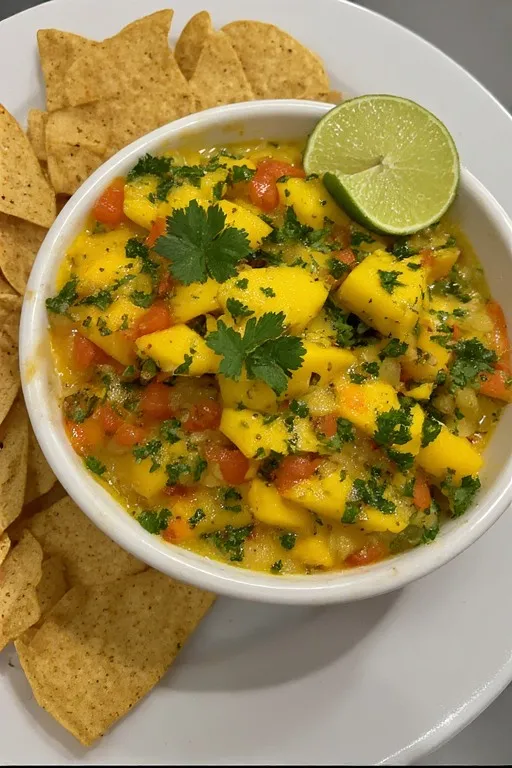
There’s a moment every summer when a bowl of mango salsa appears on a table and suddenly nothing else matters. That bright, sweet, slightly spicy, completely refreshing combination of ripe mango, jalapeño, lime, and cilantro is one of those flavor experiences that’s genuinely hard to stop eating. Ten minutes. Zero cooking. A handful of fresh ingredients at their summer best. This mango salsa recipe is the one that earns the recipe request every single time.
It’s the kind of condiment that makes grilled fish taste like a vacation, turns a plain bowl of chips into the thing everyone hovers around, and works on practically anything it touches. If you love fresh no-cook recipes that rely on good ingredients doing simple things brilliantly, the Summer Corn Salad follows the exact same philosophy — fresh, bold, ready in minutes.
Picking the Right Mango
The mango is the entire point of this recipe so it deserves real attention. An underripe mango makes a bland, slightly crunchy salsa that’s disappointing in every way. A perfectly ripe mango makes a salsa that’s sweet, juicy, and genuinely irresistible.
How to tell if a mango is ripe:
- It gives slightly when pressed — like a ripe peach
- The stem end smells fragrant and sweet — almost floral
- Color is not a reliable indicator — some ripe mangoes are still green
- It should feel heavy for its size
Best mango varieties for salsa:
- Ataulfo (honey mango) — smaller, creamy, less fibrous, deeply sweet. The best option for salsa
- Tommy Atkins — the large common supermarket variety. Works well, slightly more fibrous
- Kent or Keitt — less fibrous, very sweet, excellent for salsa
If your mango isn’t quite ripe yet, leave it at room temperature for 1–2 days. Never refrigerate an unripe mango — cold stops the ripening process completely.
Ingredients Overview
Mango — ripe, sweet, diced into small ½-inch cubes. Consistent small dice ensures every chip scoop gets a bit of everything rather than one giant mango chunk.
Jalapeño — finely diced, seeds removed for mild heat or kept in for more fire. Taste the jalapeño before adding — heat levels vary significantly between individual peppers.
Red onion — very finely diced. Adds sharpness and color. Soak in cold water for 5 minutes first if raw red onion tends to be aggressive — takes the edge off while keeping the crunch.
Fresh cilantro — chopped generously. The herby freshness that ties everything together. Skip and substitute fresh mint or parsley if cilantro isn’t your thing.
Lime juice — fresh only, always. Bottled lime juice makes the whole salsa taste flat and processed. The fresh lime juice also helps preserve the color of the mango.
Red bell pepper — optional but adds color, crunch, and a mild sweetness that extends the salsa beautifully.
Salt — more important than it sounds. Proper seasoning draws out the mango’s natural juices and makes every flavor pop.
Honey — just a small drizzle if the mango isn’t quite as sweet as you’d like. Optional but occasionally needed.
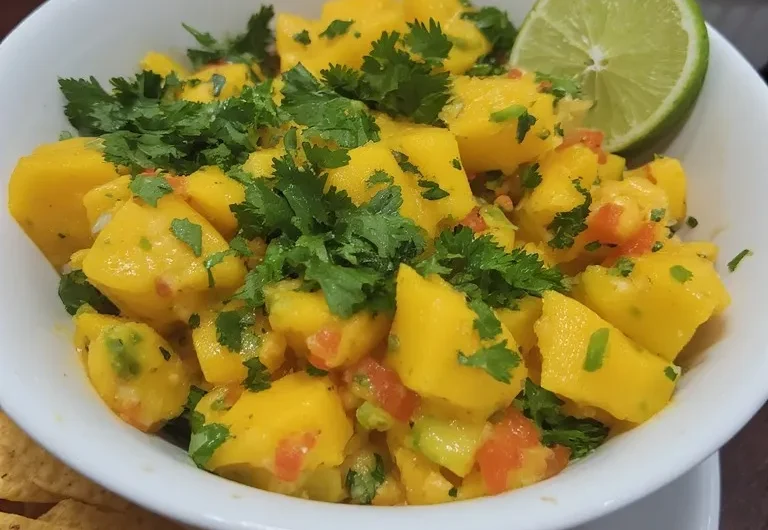
Fresh Mango Salsa Recipe
Course: AppetizersCuisine: AmericanDifficulty: Easy6
servings10
minutes10
minutes65
kcalIngredients
2 large ripe mangoes, peeled and diced into ½-inch cubes
1 jalapeño, finely diced (seeds removed for mild)
¼ cup red onion, very finely diced
½ red bell pepper, finely diced (optional)
¼ cup fresh cilantro, chopped
Juice of 1½ limes, fresh only
½ tsp salt, adjust to taste
Optional: pinch of chili powder, drizzle of honey, pinch of cumin
Directions
- Peel and dice mangoes into small ½-inch cubes.
- Finely dice jalapeño, red onion, and red bell pepper. Chop fresh cilantro.
- Combine all ingredients in a medium bowl.
- Squeeze fresh lime juice over everything. Add salt and any optional seasonings.
- Toss gently until evenly combined. Taste and adjust — more lime, salt, or jalapeño as needed.
- Rest 10 minutes before serving. Garnish with extra cilantro and lime wedge.
Notes
- 📝 Don’t miss the tips and variations under the recipe for extra flavor ideas
- 📝 For best results, see step-by-step images below
Want Perfect Texture? Check the Step-by-Step Images:
Step 1: Dice the Mango
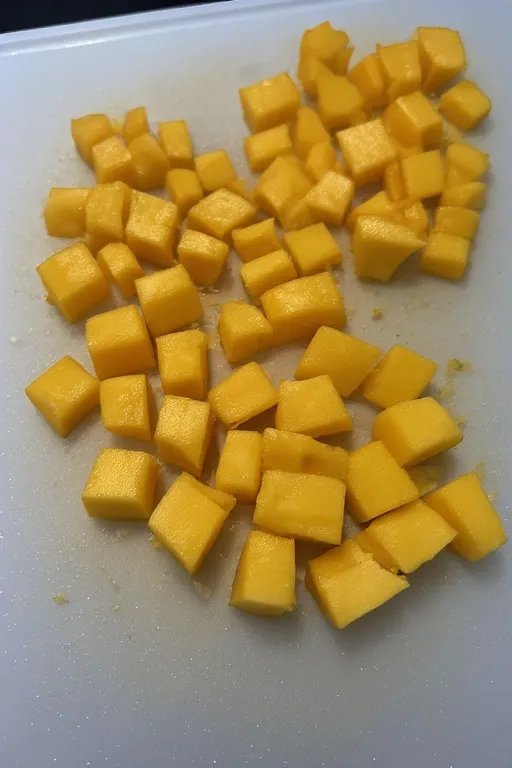
Peel the mango and dice into small ½-inch cubes. The easiest method — slice off both flat sides of the mango close to the pit, score the flesh in a crosshatch pattern, then scoop out the cubes with a large spoon. Trim the flesh from around the pit for any remaining pieces. Consistent small dice is what separates a great salsa from a clunky one — every scoop should have a balanced mix of everything.
Step 2: Prep the Remaining Ingredients
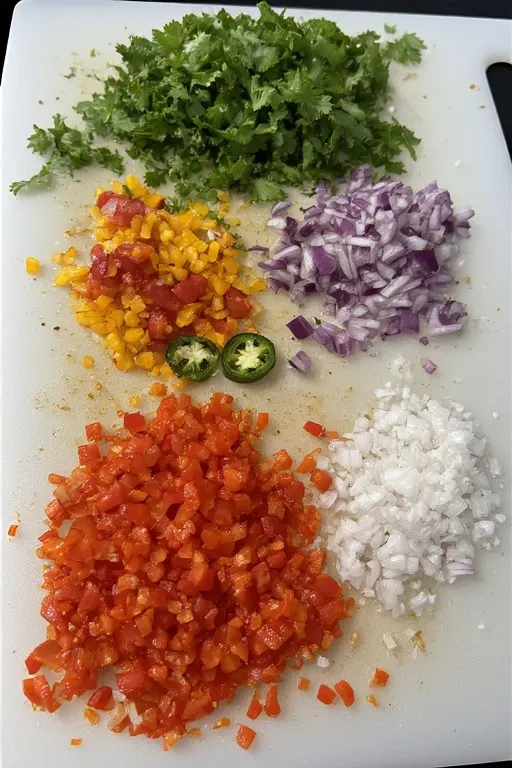
Finely dice the jalapeño — remove the seeds and membranes for mild heat, leave them in for more fire. Very finely dice the red onion and red bell pepper if using. Chop the fresh cilantro. Everything should be diced small and consistently — about the same size as the mango cubes so no single ingredient dominates a bite. The colorful mix of ingredients on the cutting board at this stage — yellow mango, green jalapeño, purple-red onion, bright green cilantro — is genuinely beautiful before it even goes in the bowl.
Step 3: Combine Everything in a Bowl
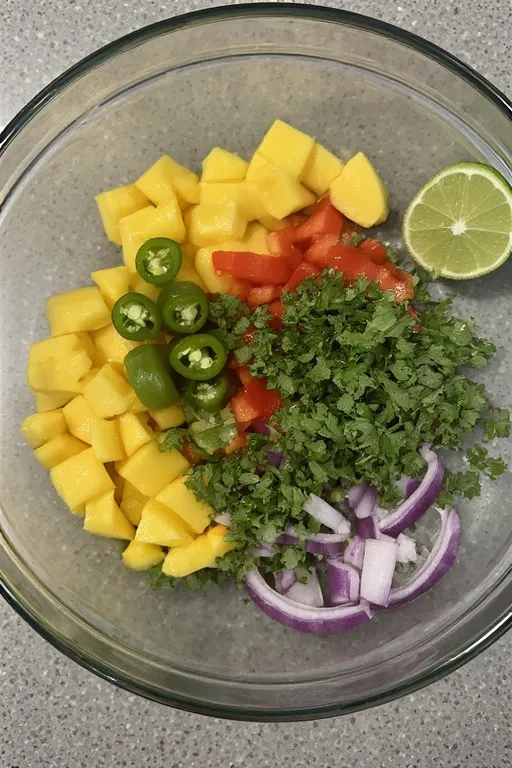
Add diced mango, jalapeño, red onion, red bell pepper, and cilantro to a medium bowl. Squeeze fresh lime juice over everything — be generous, the lime is a main flavor driver here not just a seasoning element. Add salt. If using chili powder or cumin add a small pinch now.
Step 4: Toss and Taste
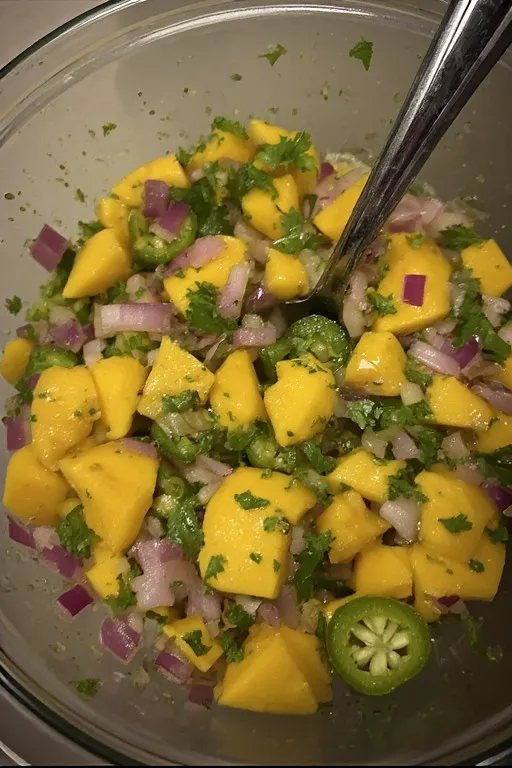
Gently toss everything together until fully combined and evenly mixed. Taste it immediately — and keep tasting. Does it need more lime for brightness? More salt to make the flavors pop? More jalapeño if you want heat? A tiny drizzle of honey if the mango isn’t quite sweet enough? This is the most important step. A well-seasoned mango salsa is genuinely extraordinary. An under-seasoned one is just diced fruit
Step 5: Rest and Serve
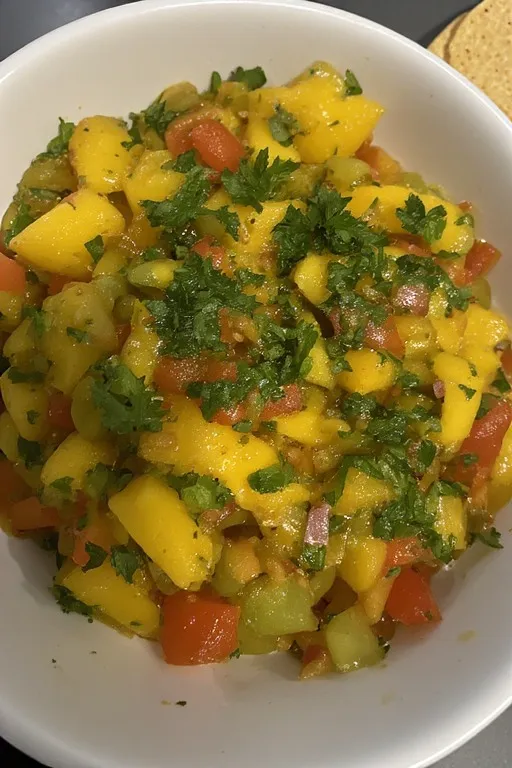
Let the salsa rest for at least 10 minutes before serving — the lime juice and salt draw out the mango’s natural juices and the flavors meld together significantly in that time. The salsa becomes more cohesive, more complex, and noticeably more delicious after resting. Serve in a bowl with tortilla chips, spoon over grilled fish or chicken, or use as a topping for tacos. Garnish with extra cilantro and a lime wedge.
Everything You Can Put Mango Salsa On
This is genuinely one of the most versatile condiments you can make. Once you have a bowl of it in the fridge, it starts going on everything:
- Tortilla chips — the classic and always the first thing it gets eaten with
- Fish tacos — mango salsa on fish tacos is one of the best flavor combinations in summer cooking. Bright, sweet, slightly spicy against crispy flaky fish
- Grilled chicken — spoon it generously over grilled chicken thighs or breasts instead of any sauce
- Shrimp — grilled shrimp with mango salsa is a genuinely elegant five-minute dinner
- Pulled pork — the sweetness of the mango against smoky pulled pork is spectacular
- Salmon — the richness of salmon against the bright fresh salsa is a perfect balance
- Burrito bowls — add a generous scoop to the Chicken Pasta Salad bowl for a fruity fresh twist, or directly on a burrito bowl for a tropical direction
- Avocado toast — spoon over halved avocado on toast with a sprinkle of flaky salt
- Salads — toss a few spoonfuls into the Avocado Chicken Salad for a tropical fruity variation that works really well
💚 Feeding the whole family just got easier — check out The Family Table, my ebook with 50 healthy dinners your kids will actually eat!
Tips for the Best Mango Salsa
- Use ripe mango — the single most important ingredient, quality matters completely
- Dice everything small and consistently — ½-inch pieces ensures every bite is balanced
- Taste the jalapeño first — heat levels vary dramatically between individual peppers
- Fresh lime only — bottled lime juice makes the whole thing taste flat
- Let it rest 10 minutes — the flavors meld and improve significantly
- Season with salt generously — draws out the mango juices and makes every flavor pop
- Soak the red onion in cold water 5 minutes if it’s too sharp — keeps the crunch, loses the bite
- Serve at room temperature — cold salsa straight from the fridge mutes the flavors
Variations Worth Trying
Mango avocado salsa — add one diced ripe avocado. Creamier, richer, and genuinely incredible on fish tacos or grilled shrimp.
Pineapple mango salsa — swap half the mango for diced fresh pineapple. Adds a different tropical sweetness and slightly more acidity.
Black bean mango salsa — add ½ cup of rinsed black beans and ¼ cup of corn. Heartier, more substantial — works as a side dish or topping for burrito bowls.
Spicy mango salsa — double the jalapeño, keep all the seeds, and add a pinch of cayenne. Bold heat against the sweet mango is genuinely excellent.
Mango cucumber salsa — add ½ cup of finely diced English cucumber. Adds extra freshness and a cooling crunch that works especially well in summer heat.
Tropical mango salsa — add ¼ cup of finely diced fresh pineapple and a pinch of toasted coconut on top. Full tropical energy.
Ingredient Substitutions
- Fresh mango → frozen mango thawed and drained — texture is slightly softer but works well
- Jalapeño → serrano pepper for more heat, or finely diced red chili
- Red onion → shallots for a milder flavor, or green onions for something lighter
- Fresh cilantro → fresh mint or fresh parsley for cilantro-avoiders
- Red bell pepper → orange or yellow bell pepper — any sweet pepper works
- Lime juice → lemon juice in a pinch — lime is significantly better here
- Fresh mango → peach or nectarine for a slightly different summer fruit salsa
Storage
- Refrigerator: Airtight container up to 2 days — the mango softens slightly over time but still tastes great
- Best served: Day of or day after making — the freshest texture and brightest flavor
- Do not freeze — mango turns mushy and watery after freezing
- Make ahead tip: Dice all ingredients and store separately, combine and add lime juice right before serving for the freshest result
Frequently Asked Questions
Q: How do I dice a mango easily? Slice both flat cheek sides off the mango close to the pit. Score each half in a crosshatch pattern — cutting through the flesh but not the skin. Push the skin side up to fan out the cubes then slice them off with a knife. Trim remaining flesh from around the pit.
Q: How spicy is mango salsa? With seeds removed the jalapeño adds very mild background heat that most people barely notice. With seeds left in it adds moderate heat. Using two jalapeños with seeds makes it properly spicy. Taste the jalapeño before adding — individual peppers vary dramatically.
Q: Can I make mango salsa the night before? You can — it actually develops more flavor overnight as the lime juice and salt work on the mango. The texture softens slightly by day two but the flavor is excellent. Make it the morning of or the night before for the best balance of flavor and texture.
Q: What mango is best for mango salsa? Ataulfo (honey) mangoes are the best — small, creamy, deeply sweet, and less fibrous than the large Tommy Atkins variety. If you can only find Tommy Atkins they work perfectly well — just make sure they’re fully ripe.
Q: Is mango salsa healthy? Very — mango is packed with vitamin C and antioxidants, the vegetables add fiber and nutrients, and there’s no added fat or artificial ingredients. It’s one of the most genuinely wholesome condiments you can make.
Q: Can I use frozen mango for salsa? Yes — thaw completely and drain any excess liquid before using. The texture will be slightly softer and less crisp than fresh but the flavor is good and it works really well in a pinch.
The Condiment That Makes Everything Taste Like Summer
Mango salsa is one of those recipes that earns a permanent place in your summer repertoire the first time you make it. Ten minutes, zero cooking, and something that transforms every meal it touches into something brighter, fresher, and more interesting. Make a big bowl, put it on the table with chips first, and watch it disappear before the main course is even ready.