
This is the best lasagna recipe — layers of rich meat sauce, creamy ricotta, and melted mozzarella baked until golden and bubbly. Worth every minute of the effort.
➡️ You should try this recipe next: Crockpot Ravioli Lasagna Easy Cheesy Slow Cooker Dinner
Some recipes are worth the effort.
Lasagna is one of them. Not a weeknight dinner — a Sunday project. The kind of meal you make when you want to feed people properly, when you want the house to smell incredible for two hours, when you want leftovers that are genuinely better the next day.
This is a proper lasagna. Meat sauce made from scratch with ground beef and Italian sausage, simmered until rich and thick. Ricotta seasoned with egg, parmesan, and fresh parsley. Three types of cheese layered throughout. Built carefully in a 9×13 pan and baked until golden and bubbly.
It takes time. It is completely worth it.
Ingredients Overview
Ground beef and Italian sausage together make a significantly better meat sauce than either one alone. The beef adds body and the sausage adds flavor — fennel, garlic, and spice built right into the meat. An 80/20 ground beef blend gives you the best flavor. Mild or hot Italian sausage depending on your heat preference.
Crushed tomatoes and tomato paste form the base of the sauce. Crushed tomatoes give you texture and body. Tomato paste adds concentrated, deep tomato flavor and helps the sauce thicken properly. Good quality canned tomatoes make a noticeable difference here — San Marzano tomatoes are worth it.
Onion, garlic, and herbs build the aromatics. Dried oregano, dried basil, red pepper flakes, salt, pepper, and a bay leaf that simmers with the sauce and adds a background depth that’s hard to identify but easy to miss when it’s not there.
Ricotta cheese is the creamy layer. Full-fat ricotta gives the best texture — it stays smooth and creamy rather than watery as the lasagna bakes. Mixed with egg, parmesan, fresh parsley, salt, and pepper, it becomes a proper seasoned filling.
Lasagna noodles — regular or no-boil. Regular noodles boiled to just under al dente give you the most control over final texture. No-boil noodles work well and save time — they hydrate in the sauce during baking.
Low-moisture mozzarella is what gives you those golden, melted, slightly browned pools of cheese. Shredded low-moisture mozzarella melts more evenly than fresh mozzarella and doesn’t release excess water into the lasagna.
Parmesan adds sharpness and depth throughout every layer and on top. Always freshly grated — pre-grated parmesan in a can doesn’t melt or taste the same.
Fresh basil goes on at the very end right before serving. It adds a bright, fresh note that cuts through the richness of the cheese and meat.
How to Make the Best Lasagna
Make the Meat Sauce
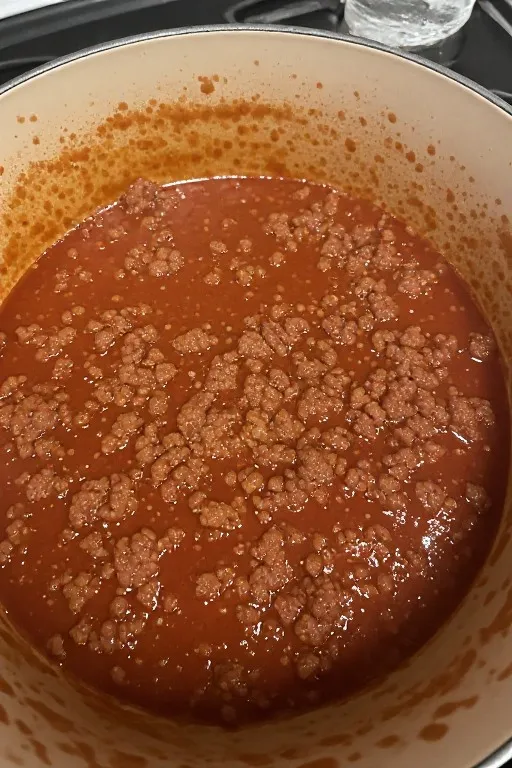
In a large heavy-bottomed pot heat 1 tablespoon olive oil over medium-high heat. Add 1 pound ground beef and 1 pound Italian sausage (casings removed). Break up the meat and cook for 6–8 minutes until fully browned.
Add 1 large diced onion and cook 3–4 minutes until softened. Add 5 cloves minced garlic and cook 60 seconds.
Stir in 2 tablespoons tomato paste and cook for 2 minutes, stirring constantly — this cooks out the raw tomato flavor and adds depth.
Pour in 2 cans (28 oz each) crushed tomatoes. Add 1 teaspoon dried oregano, 1 teaspoon dried basil, ½ teaspoon red pepper flakes, 1 teaspoon salt, black pepper, and 1 bay leaf.
Bring to a simmer. Reduce heat to low and cook uncovered for 30 minutes until the sauce has thickened and the flavors have developed. Remove the bay leaf. Taste and adjust salt.
Cook the Noodles
While the sauce simmers, cook 12 lasagna noodles in well-salted boiling water for 2 minutes less than package directions. They finish cooking in the oven. Drain and lay flat on a lightly oiled baking sheet.
If using no-boil noodles, skip this step.
Make the Ricotta Filling
In a bowl stir together 2 cups full-fat ricotta, 1 large egg, ½ cup freshly grated parmesan, 3 tablespoons fresh parsley chopped, ½ teaspoon salt, and black pepper until smooth.
Assemble the Lasagna
Preheat oven to 375°F. Spray a 9×13 baking dish with cooking spray.
Spread 1 cup meat sauce across the bottom of the dish.
Layer 1: 3 noodles side by side, overlapping slightly. Spread ⅓ of the ricotta mixture over the noodles. Scatter 1 cup shredded mozzarella and 2 tablespoons parmesan. Spoon 1½ cups meat sauce over the cheese.
Layer 2: 3 more noodles. Another ⅓ ricotta. 1 cup mozzarella. 2 tablespoons parmesan. 1½ cups meat sauce.
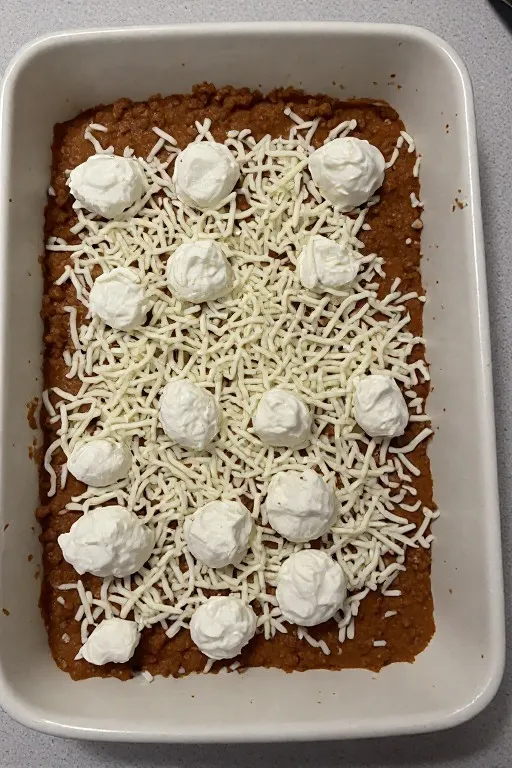
Layer 3: 3 more noodles. Remaining meat sauce spread evenly. Top with the remaining 2 cups mozzarella and remaining parmesan in a generous, even layer.
Bake
Cover tightly with aluminum foil — spray the underside of the foil with cooking spray first so the cheese doesn’t stick.
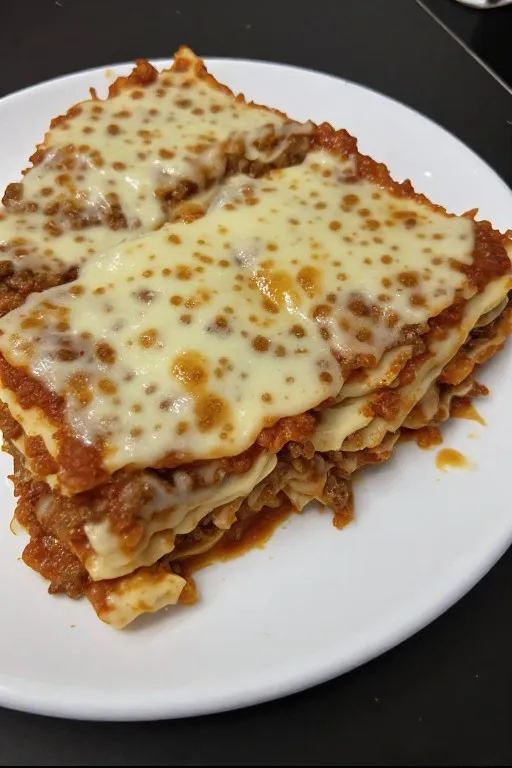
Bake covered at 375°F for 30 minutes. Remove the foil and bake uncovered for 20–25 more minutes until the top is golden, bubbly, and the edges are slightly crispy.
Rest 15 minutes before cutting. Not optional — lasagna cut immediately falls apart. Rest time lets the layers set so you get clean slices.
💚 Upgrade your meals with high protein recipes the whole family will love — check out The High Protein Cookbook, packed with delicious protein-packed recipes to keep you full and energized!
Tips for the Best Lasagna
Simmer the sauce long enough. Thirty minutes minimum. The sauce needs time to thicken and the flavors need time to develop. A thin sauce makes a watery lasagna. Let it reduce properly before assembling.
Undercook the noodles. Pulling them 2 minutes before al dente means they finish cooking in the oven without turning mushy. Fully cooked noodles baked for 50 minutes become overcooked and soft.
Season the ricotta. Plain ricotta straight from the container is bland. The egg, parmesan, parsley, salt, and pepper make a real difference in every layer.
Spray the foil. Cheese sticks aggressively to plain foil and takes the golden top layer with it when you remove it. A quick spray on the underside of the foil saves the whole top of the lasagna.
Rest before cutting. Fifteen minutes minimum. Lasagna cut immediately collapses and the sauce floods out. Rest and the layers hold when you lift a slice.
Let the top brown. The uncovered 20–25 minutes at the end is what gives you that golden, slightly bubbled, slightly crispy cheese top. Don’t pull it early — that color is flavor.
Variations
Add vegetables. Sautéed mushrooms, spinach, or zucchini layered in with the meat sauce add nutrition and texture without changing the classic feel. Spinach works especially well between the ricotta and sauce layers.
Make it vegetarian. Replace the meat with a combination of sautéed mushrooms, zucchini, and spinach. Make the tomato sauce the same way with just vegetables. Still deeply satisfying.
White lasagna. Skip the meat sauce and build with béchamel — butter, flour, milk, and parmesan — instead. Layer with ricotta, spinach, and mozzarella. A completely different but equally classic direction that pairs well alongside the healthy baked feta pasta with vegetables for an Italian dinner spread.
Add a béchamel layer. Some classic Italian lasagnas include both a meat sauce and a béchamel. Spread a thin layer of béchamel over each noodle layer before adding the ricotta. Adds creaminess and richness that takes the lasagna to another level.
Use fresh pasta sheets. Fresh lasagna sheets from an Italian grocery give a more delicate, tender result. No pre-cooking required — layer straight from the package. A noticeable upgrade.
Ingredient Substitutions
Ground beef and Italian sausage → All ground beef for simplicity. Ground turkey or chicken for a leaner version — season more aggressively since poultry has less natural flavor. All Italian sausage for maximum flavor.
Crushed tomatoes → Whole San Marzano tomatoes crushed by hand — chunkier with excellent flavor. Jarred marinara sauce as a shortcut — reduce added seasonings since it’s already seasoned.
Ricotta → Cottage cheese blended smooth as a lower-fat substitute. Small curd cottage cheese left unblended for a chunkier texture some people prefer.
Lasagna noodles → No-boil noodles to save time. Fresh pasta sheets for a more delicate result. Gluten-free lasagna noodles — follow package directions.
Mozzarella → Provolone for a sharper, slightly smokier flavor. A blend of Italian cheeses. Fresh mozzarella — slice thin and pat very dry to prevent excess water.
Fresh parsley → Fresh basil in the ricotta for a more Italian-leaning flavor. Both parsley and basil together works excellently.
Storage
Fridge: Store covered in the baking dish or in airtight containers for up to 5 days. The flavors deepen significantly overnight. Day two lasagna is genuinely better than day one.
To reheat individual slices: Microwave covered for 2–3 minutes. Add a splash of water or extra sauce before microwaving. Reheat in a 350°F oven covered with foil for 20 minutes for the best result.
To reheat the whole dish: Cover with foil and bake at 350°F for 30–40 minutes until heated through. Remove foil the last 10 minutes to re-crisp the cheese top.
Freezing: Lasagna freezes excellently — one of the best dishes for batch cooking.
Before baking: Assemble completely, cover tightly with plastic wrap then foil, freeze up to 3 months. Thaw overnight in the fridge then bake as directed — add 15 minutes to the covered bake time.
After baking: Cool completely, portion into individual servings, freeze for up to 3 months. Reheat from frozen in the microwave or oven.
Frequently Asked Questions
Do I have to boil lasagna noodles first? Only regular dried noodles — and only to 2 minutes under al dente. No-boil noodles skip this step and hydrate in the sauce during baking. Both work well — regular noodles give slightly more control over texture.
Why is my lasagna watery? Usually caused by sauce not reduced enough, fresh mozzarella releasing water, or fully cooked noodles releasing starch. Make sure the meat sauce is thick before layering. If using fresh mozzarella, pat the slices very dry.
Can I make lasagna ahead? Yes — one of the best make-ahead dinners. Assemble completely, cover tightly, and refrigerate up to 24 hours. Pull from the fridge 30 minutes before baking. Add 10–15 minutes to the covered bake time since it’s starting cold.
How many layers should lasagna have? Three to four noodle layers is standard for a 9×13 pan. Three layers with generous sauce and cheese in each produces a substantial, properly layered result.
Can I use cottage cheese instead of ricotta? Yes. Blend small curd cottage cheese smooth for a texture closer to ricotta. Slightly tangier but works well and is a lower-fat option.
How do I get clean slices? Rest the lasagna for at least 15 minutes before cutting and use a sharp knife. A thin spatula helps lift clean slices from the pan. Cutting immediately gives you collapsed, sauce-flooded slices regardless of how perfectly it was assembled.
You May Also Like
- Crockpot Ravioli Lasagna Easy Cheesy Slow Cooker Dinner
- Healthy Baked Feta Pasta with Vegetables Easy Dinner
Final Thoughts
The best lasagna recipe takes time. That’s not a flaw — it’s the point. The slow-simmered meat sauce, the carefully seasoned ricotta, the generous layers of cheese, the golden bubbly top that comes out of the oven.
It’s Sunday cooking. The kind that fills the house with a smell that makes everyone wander into the kitchen asking when it’s ready.
Make it once and you’ll understand why people keep coming back to the classic.

Best Lasagna Recipe Rich Cheesy and Worth It
Description
This is the best lasagna recipe — layers of rich meat sauce, creamy ricotta, and melted mozzarella baked until golden and bubbly. Worth every minute of the effort.
Ingredients
Meat Sauce:
Ricotta Filling:
Assembly:
Instructions
- Heat olive oil in a large pot over medium-high heat. Brown ground beef and Italian sausage, breaking up the meat, 6–8 minutes. Add onion and cook 3–4 minutes. Add garlic and cook 60 seconds.
- Add tomato paste and cook 2 minutes stirring constantly. Pour in crushed tomatoes. Add oregano, basil, red pepper flakes, salt, pepper, and bay leaf. Simmer uncovered on low 30 minutes until thick. Remove bay leaf. Adjust seasoning.
- Cook lasagna noodles 2 minutes under al dente. Drain and lay flat on a lightly oiled baking sheet.
- Mix ricotta filling: stir together ricotta, egg, parmesan, parsley, salt, and pepper until smooth.
- Preheat oven to 375°F. Spray a 9x13 baking dish.
- Spread 1 cup meat sauce across the bottom of the dish.
- Layer 1: 3 noodles, ⅓ ricotta filling, 1 cup mozzarella, 2 tablespoons parmesan, 1½ cups meat sauce.
- Layer 2: 3 noodles, ⅓ ricotta filling, 1 cup mozzarella, 2 tablespoons parmesan, 1½ cups meat sauce.
- Layer 3: 3 noodles, remaining meat sauce, remaining mozzarella and parmesan on top.
- Spray underside of foil with cooking spray. Cover dish tightly and bake 30 minutes. Remove foil and bake 20–25 more minutes until golden and bubbly.
- Rest 15 minutes before cutting. Scatter fresh basil over the top before serving.
Nutrition Facts
- Amount Per Serving
- Calories 580kcal
- % Daily Value *
- Total Fat 28g44%
- Saturated Fat 13g65%
- Cholesterol 115mg39%
- Sodium 860mg36%
- Total Carbohydrate 38g13%
- Dietary Fiber 3g12%
- Sugars 8g
- Protein 36g72%
* Percent Daily Values are based on a 2,000 calorie diet. Your daily value may be higher or lower depending on your calorie needs.
Note
Simmer the meat sauce for the full 30 minutes — a properly thickened sauce is what prevents watery lasagna and gives every layer real depth of flavor.
Spray the underside of the foil with cooking spray before covering — cheese sticks aggressively to plain foil and takes the golden top with it when removed.
❤️ Your Support Means a Lot I'm a new food blogger, and every rating and comment helps me grow and reach more readers. If you enjoyed browsing this recipe, I'd truly appreciate a quick rating below and would love to hear your thoughts in the comments. Thank you for supporting my journey and being part of Jessica Healthy Recipes! ❤️